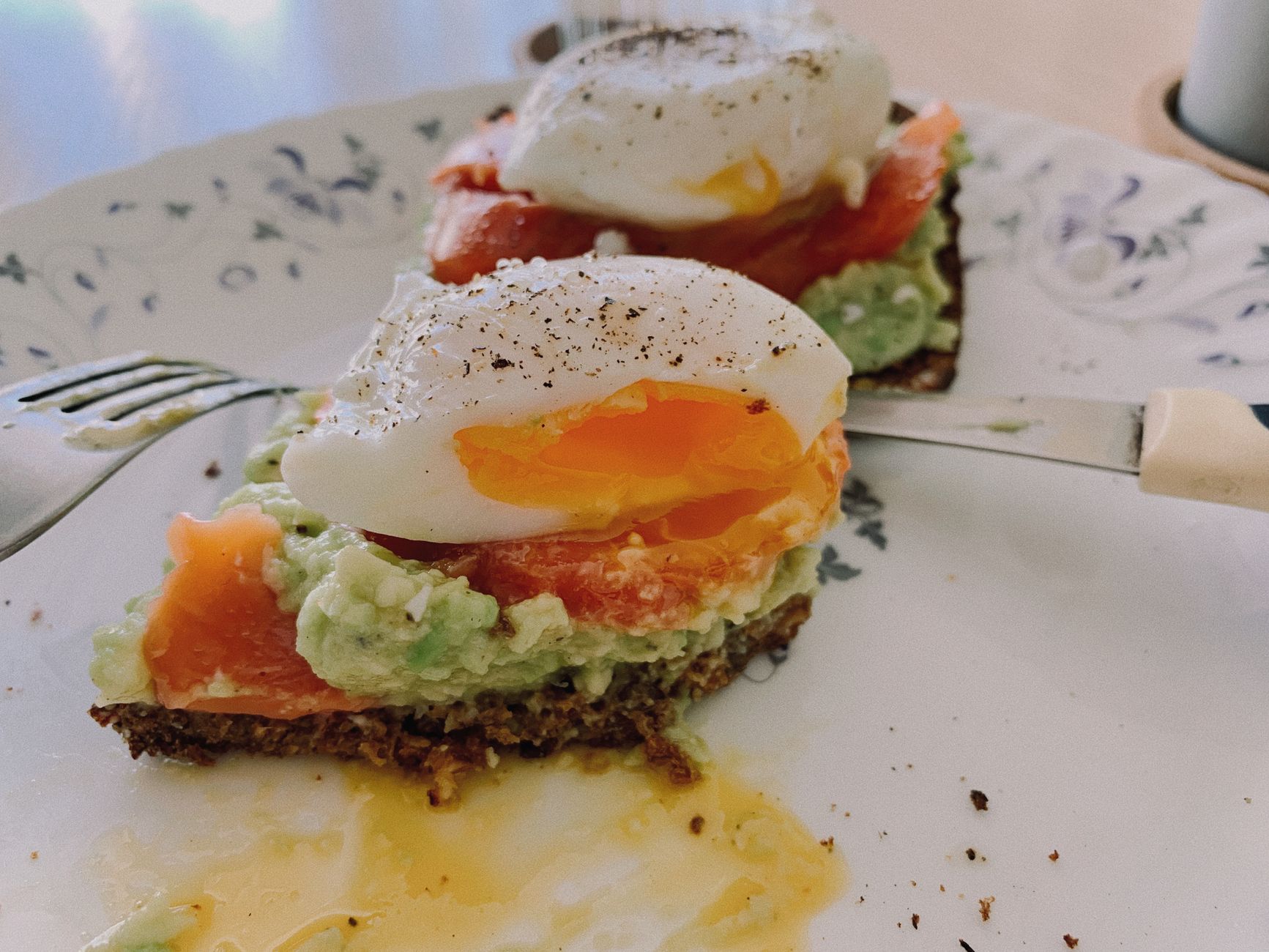
A croissant and a coffee is around 400 calories and leaves you hunting for something at half past ten. Eggs on rye with avocado is roughly the same 400 and holds until one o'clock. Same energy, entirely different morning. The difference is three components.
Protein: 25–30 g, non-negotiable
It is the most satiating of the macronutrients — the mechanism is covered in Harvard's Nutrition Source1. Most breakfasts contain almost none, which is why most breakfasts fail. Three eggs, a large tub of Greek yoghurt, or cottage cheese all get you there on their own.
Fibre: the part everyone skips
Fibre slows the whole meal down and flattens the rise and fall that leaves you hungry again. Oats, berries, rye, beans, a pear. Both Harvard's fibre overview2 and the NHS guide to getting more fibre3 make the same point: almost nobody eats enough of it, and breakfast is the easiest meal in which to fix that.
Some fat, not none
A fat-free breakfast empties quickly. Avocado, nuts, olive oil, the yolk you were about to throw away. It does not need to be much — enough to slow things down.
Four that work
- Greek yoghurt, berries, walnuts. About 25 g protein, two minutes, no cooking.
- Three eggs on rye with avocado. About 25 g protein, five minutes, hits all three components.
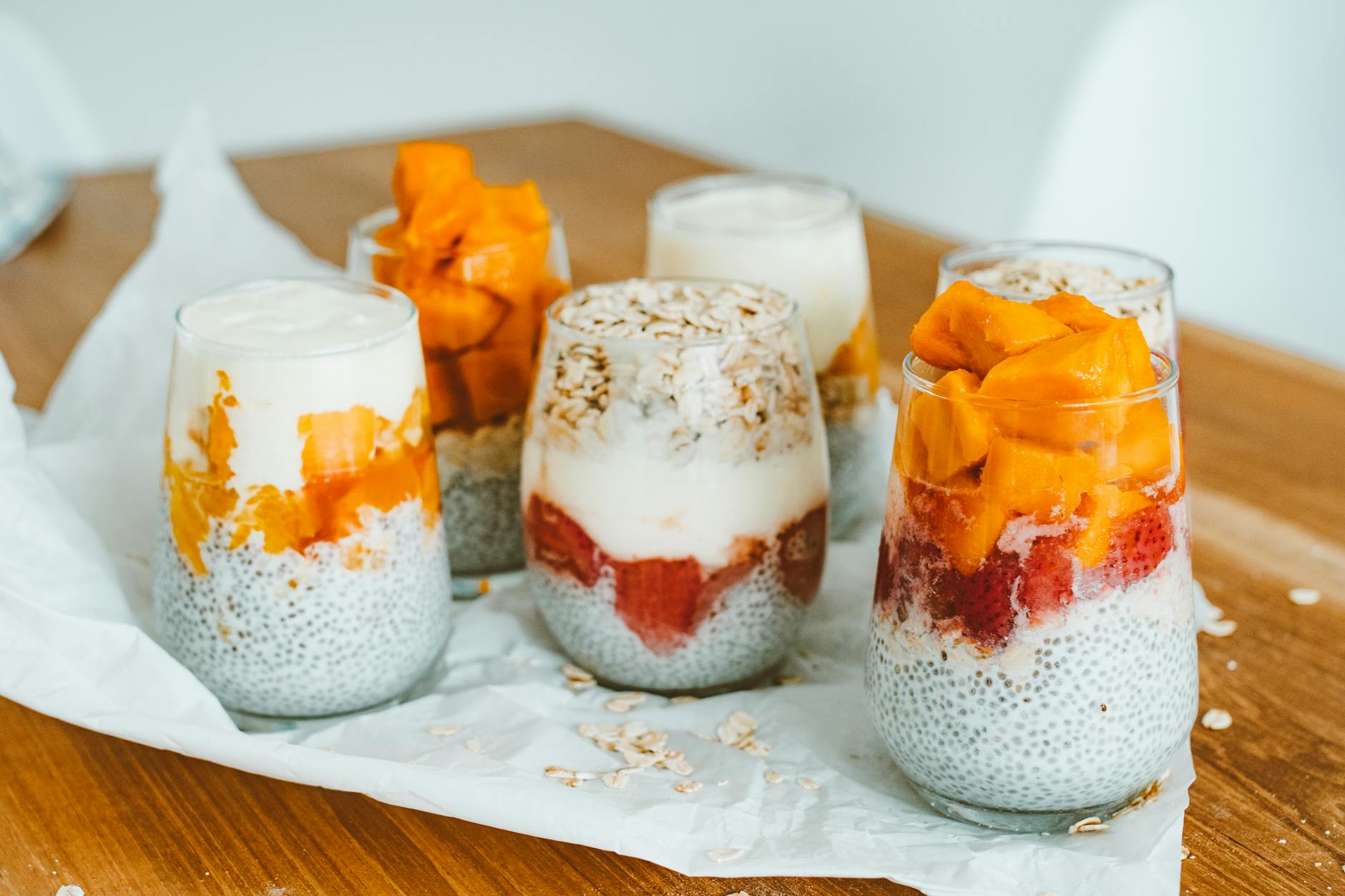
- Overnight oats with milk and seeds. Made the night before, so mornings need nothing at all.
- Cottage cheese with tomato and olive oil. The highest protein per minute of effort of anything on this list.
And if you genuinely don't want breakfast
Then don't have one. Skipping breakfast is not a mistake in itself — what matters is where those calories and that protein land instead. The NHS tips for healthy eating4 are about the day as a whole for exactly this reason. What does not work is skipping it, arriving at lunch ravenous, and eating twice as much — which is the actual pattern most people who "don't do breakfast" are living.